Trump Urges Congress to Cap Credit Card Rates at 10% — What It Means for Consumers, Banks, and the Economy
Updated January 2026
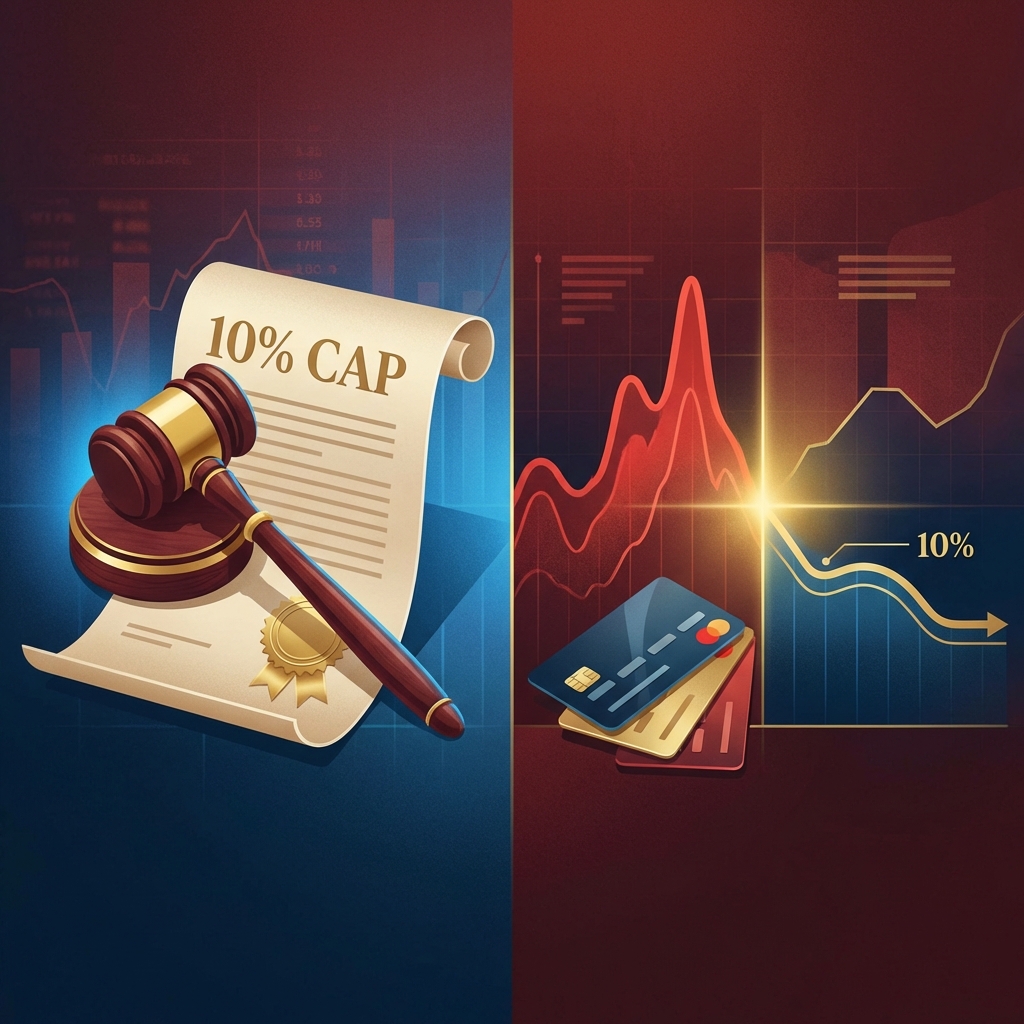
In a move that has sent shockwaves through the American financial and political landscape, U.S. President Donald Trump has publicly urged Congress to approve a temporary but highly impactful cap on credit card interest rates, proposing a ceiling of 10% for a period of one year.
The president argues that such a measure is urgently needed to reduce the immense financial pressure on American households and to make the cost of borrowing more affordable for millions of citizens. The proposal has immediately ignited an intense and deeply partisan debate among lawmakers, economists, and the leaders of the nation's largest financial institutions.
On one side, supporters are hailing it as a bold and necessary consumer-protection measure, a lifeline for families struggling in an environment of high household debt. On the other, critics are sounding the alarm, warning that such a heavy-handed price control could severely disrupt credit markets, sharply restrict lending to the most vulnerable, and trigger a cascade of unintended and negative consequences.
Why Credit Card Rates Have Become a Political Flashpoint
The timing of this proposal is no accident. Credit card interest rates have become a politically sensitive topic. In recent years, the average Annual Percentage Rate (APR) on credit card accounts has climbed sharply, with many popular cards now charging 20%, 25%, or even 30% in interest.
🚨 The Current Strain on Consumers
- Household credit card debt has surged to record highs, surpassing the one-trillion-dollar mark.
- Delinquency rates are steadily rising, especially among lower-income and younger borrowers.
- Inflation has reduced the real purchasing power of many families' wages.
- Interest rates across the economy remain at widespread highs.
The Nuts and Bolts: What The Proposal Would Do
The core of the proposal is a call for a temporary, nationwide legal cap of 10% on credit card interest rates, with a suggested duration of one year. The stated goals are to provide immediate financial relief to households and potentially stimulate consumer spending.
President Trump has argued that current high interest rates are trapping consumers in a "vicious cycle of debt" and that a legislated reduction could free up household income for other productive uses.
A Primer on Pricing Risk
Credit card interest rates reflect a complex pricing model: the Federal Reserve's benchmark rate, the risk profile of the borrower, funding costs, and expected losses from defaults. Unlike mortgages, credit card debt is unsecured. A legal cap would fundamentally alter this risk-pricing mechanism, limiting banks' ability to be compensated for lending to less creditworthy borrowers.
The Two Sides of the Coin: Impact on Consumers
The Potential Benefits (For Existing Borrowers)
Lower Monthly Payments: A drastic reduction in interest charges for millions carrying a balance.
Faster Debt Repayment: More of each payment goes toward principal.
Reduced Financial Stress: Immediate relief for struggling households.
The Potential Risks (For Future Borrowers)
A "Credit Crunch": If banks can't price for risk, they may dramatically tighten approval standards, cutting off access for lower-income borrowers.
Higher Fees: Banks might raise annual or late fees to compensate for lost interest income.
Loss of Rewards: Cashback and travel points programs could be reduced or eliminated as profitability drops.
The Shock to the Banking System
Credit cards are a profit engine for banks. A 10% cap would be a seismic shock.
In the short term, we could see a sharp decline in net interest income and significant stock price volatility. Long-term, banks might shift focus exclusively to wealthier customers, expand secured lending, or systematically reduce their credit card portfolios.
Conclusion: A Fundamental Question
President Trump's call to cap credit card interest rates at 10% offers a clear promise of immediate relief but carries significant long-term risks of a credit crunch and market distortions.
Whether or not this becomes law, it has changed the national conversation, forcing a debate on whether the price of consumer credit should be governed by free-market risk pricing or government intervention. The answer will shape the future of household finance in the United States.
Disclaimer: This article is for informational and educational purposes only and does not constitute financial or investment advice.