Why Gold, Silver, and Commodities Are Back in Focus — and What It Says About the Global Economy
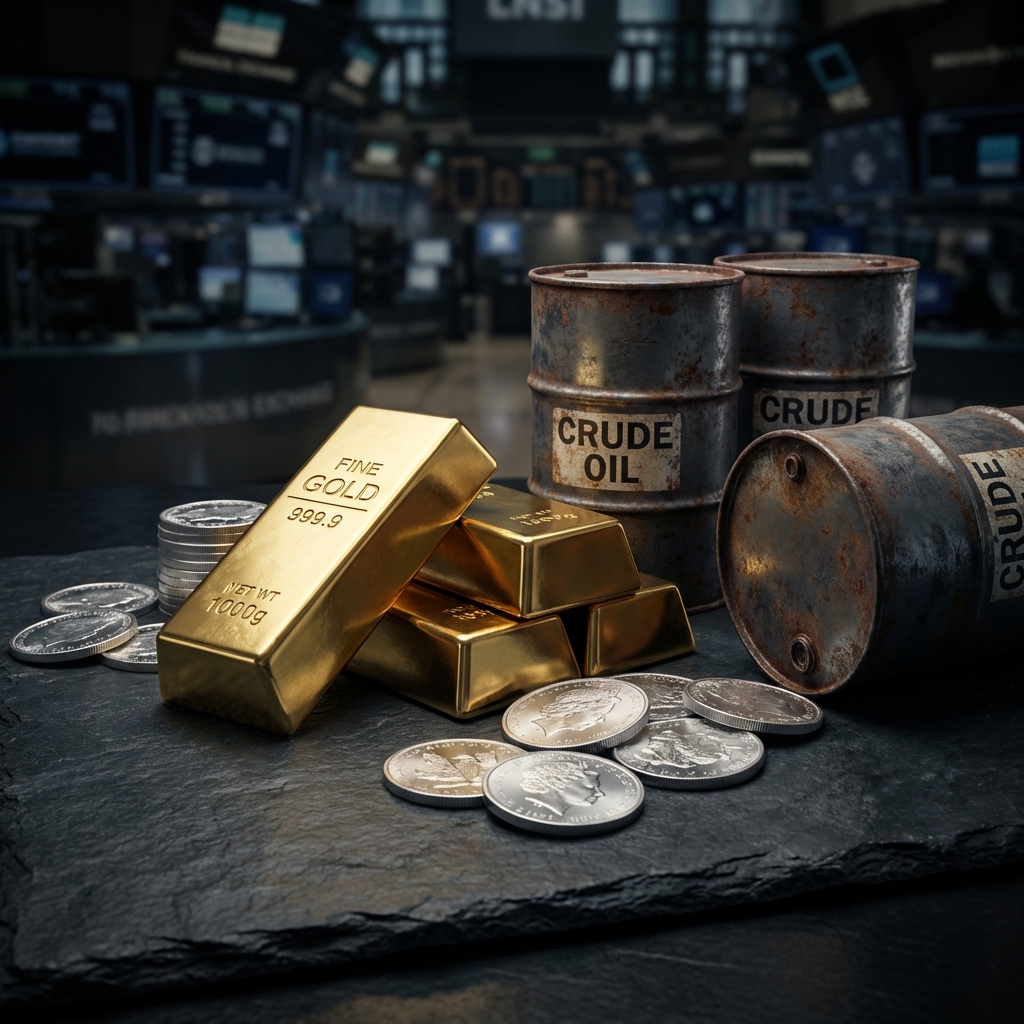
OVER THE PAST FEW MONTHS, a subtle but significant undercurrent has been gaining strength in the world of global finance. Gold has been making a quiet, steady climb. Silver, its more volatile counterpart, has been swinging higher with growing and undeniable momentum. At the same time, energy and industrial metals have been drawing renewed interest from a broad swath of market participants. In parallel, a sense of caution has crept back into the markets for stocks, bonds, and currencies.
This is not a series of random, unconnected price movements. It is the reflection of a deeper, more fundamental shift in how investors, institutions, and even nations perceive risk, stability, and the future trajectory of the global economy. When precious metals and physical commodities begin to capture the market's attention, it is often a powerful and reliable signal of one thing: confidence in the smooth and predictable functioning of the purely financial system is becoming less certain.
This analysis will explore why this important shift is happening now, what it tells us about the state of the world economy, and how different groups are reacting to this new and more complex environment.
A Fundamental Shift in Market Psychology
Financial markets are not just driven by data; they are driven by narratives, expectations, fear, and, most importantly, trust. For much of the past decade, the dominant narrative was one of unwavering confidence. Investors largely believed that central banks, armed with the tools of quantitative easing and zero-interest-rate policy, could easily manage any crisis. There was a widespread conviction that inflation was a relic of the past and that economic growth, while sometimes disrupted, would always return quickly. This deep-seated confidence was the bedrock that supported long and powerful bull markets in stocks and pushed interest rates to historic lows.
That confidence has been profoundly weakened. The narrative has changed.
The Changing Narrative
- Sticky Inflation: Inflation surprised policymakers and proved far more persistent than predicted.
- Geopolitical Reshaping: Tensions have escalated, fundamentally reshaping the global flow of trade and energy.
- Debt Trap: Government debt has climbed to unimaginable levels, trapping central banks between fighting inflation and supporting a fragile economy.
In this new and more uncertain environment, it is only rational for investors to begin to shift their focus toward assets that are not dependent on the promises, policies, or the perceived stability of financial and political institutions. Gold, silver, and physical commodities fit this description perfectly.
Their value is not derived from future earnings forecasts, corporate balance sheets, or the political credibility of a government. They are tangible. They exist outside the purely financial system, and that independence is precisely what makes them so attractive when faith in the system itself begins to decline.
Why Gold Is Gaining Attention Again: The Anchor in the Storm
Gold does not produce any income. It does not grow in the traditional sense. It does not innovate. And yet, its total market value continues to be measured in the trillions of dollars. The reason for this enduring appeal is that gold plays a psychological and economic role that no other asset can. It represents permanence and certainty in a world that increasingly feels unstable.
When investors become concerned about the long-term outlook, their reasons for buying gold are clear and time-tested:
- When they worry about inflation, gold acts as a proven store of value that protects their purchasing power.
- When they worry about currency debasement from excessive money printing, gold offers an anchor of value that is independent of any single fiat currency.
- When they worry about financial crises or bank failures, gold's lack of counterparty risk—the fact that it is not someone else's promise to pay—becomes its most valuable attribute.
In recent months, all of these worries have intensified. Inflation is no longer seen as a "transitory" issue; even where it has slowed, the cumulative increase in the cost of living has made many households feel permanently poorer. Governments are carrying much higher debt burdens, and central banks are trapped between the political pressure to support growth and the economic necessity of maintaining price stability.
In this environment, gold becomes less of a speculative investment and more of a form of financial insurance. People are not buying it because they expect it to "go to the moon." They are buying it because they want to own something that does not depend on the success of a policy or the stability of an institution.
Silver’s Unique Appeal: A Foot in Two Worlds
Silver is a more complex and fascinating asset than gold. It shares many of gold’s monetary qualities, acting as a hedge against inflation and a store of value. But it also has a deep and growing industrial role.
Silver is a critical and often irreplaceable input in the world's most important technologies: electronics, solar panels, medical equipment, and electric vehicles. This gives silver a foot in two different worlds: the world of financial hedging and the world of economic growth.
"This dual nature is what makes silver so much more volatile than gold. It is not a pure safe haven; it is a hybrid asset."
However, this volatility is not a weakness; it is the very source of silver’s unique appeal. When investors expect inflation combined with industrial expansion or a massive investment in new technology (like the green energy transition), silver becomes an incredibly attractive asset. It offers a way to benefit from both rising commodity prices and future economic growth simultaneously.
When investors expect broader instability but also want upside potential, silver becomes a powerful hedge that also offers leverage. This unique combination is why silver often lags gold at the very beginning of an uncertain period (when fear is highest) but can later dramatically outperform when the market's focus shifts from immediate crisis to long-term inflation and recovery.
The Broader Commodity Story: The Return of the Physical World
Precious metals are not the only tangible assets benefiting from this fundamental shift in thinking. The entire commodity complex is regaining its strategic importance.
Energy commodities, particularly oil and gas, remain at the center of geopolitical tensions, supply risks, and the ongoing energy transition. Their prices are a key driver of global inflation and economic stability. Industrial metals like copper, lithium, and nickel are now inextricably linked to the defining long-term trends of the 21st century: electrification, renewable energy, and global infrastructure development.
This means that commodities are no longer just cyclical trades that go up and down with the business cycle. They are increasingly seen as strategic assets. The transition to a green energy economy alone requires a massive, multi-decade investment in the mining and processing of physical metals. Electrification, digitalization, and the upgrading of aging infrastructure all require immense quantities of raw materials. These are powerful, long-term, structural trends that support commodity demand, even if short-term economic conditions fluctuate.
At the same time, the supply of these critical commodities is being constrained by stricter environmental regulations, rising political risks in mining jurisdictions, and the long and expensive investment cycles required to bring new production online. This powerful combination of rising structural demand and constrained supply is creating a persistent and long-term tension in the commodity markets.
What Investors and Central Banks Are Really Signaling
The growing interest in precious metals and commodities is not necessarily a bet on an impending catastrophe. It is a much more subtle and rational signal of deep-seated uncertainty. It suggests that a growing number of market participants are no longer confident that traditional financial assets alone—stocks and bonds—will provide sufficient protection and returns in all possible future scenarios. They are seeking balance and diversification. This is not a fear-driven panic; it is a logical response to a world that feels more complex, less predictable, and more politically fragmented. People are not abandoning the financial system; they are prudently hedging against its inherent weaknesses.
This trend is being driven by a broad coalition of actors:
- Long-term investors see precious metals as essential portfolio insurance.
- Traders see the increased volatility as a source of opportunity.
- Institutions see commodities as a tool for diversification and risk management.
- Central banks, most importantly, see gold as a way to protect their national wealth against currency and geopolitical risk, and to reduce their dependence on any single foreign financial system.
The fact that this trend is supported by such a wide range of participants gives it a sense of stability and suggests it is more than just a fleeting, speculation-driven fad.
Final Thoughts: The Re-emergence of the Tangible
The renewed interest in gold, silver, and commodities is not a prediction of a coming crisis. It is a reflection of realism.
It reflects a growing recognition that the global economy faces a series of profound structural challenges: historically high debt levels, complex demographic shifts, political fragmentation, climate risks, and rapid technological disruption. In such an environment, relying solely on the promise of future growth from financial assets is a risky strategy. Diversification becomes essential. Stability becomes valuable. The physical world reasserts its importance.
That is why precious metals and commodities are back in focus—not because the world is ending, but because the world is fundamentally changing. And in times of great change, people and nations alike begin to look for anchors.
Gold provides the ultimate anchor of stability. Silver offers a unique combination of both an anchor and a sail. Commodities ground the entire system in physical reality. The attention being paid to this combination tells us more about the future of the global economy than any single headline ever could.