U.S. Credit Card Defaults Are Rising — A Quiet Warning Sign for the Economy
Updated January 2026
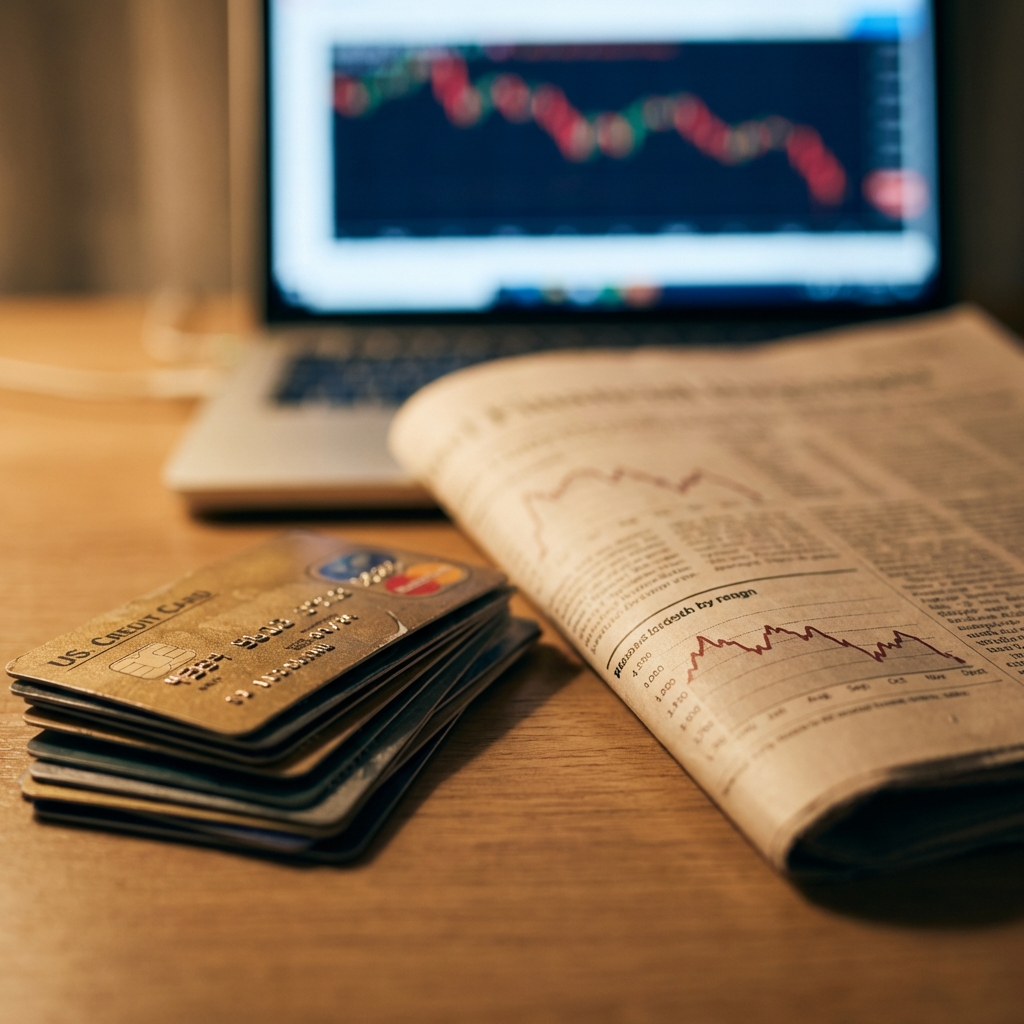
Credit card defaults are quietly rising across the U.S. economy. There is no panic, no market crash, and no emergency announcement — but historically, this is how economic stress often begins.
When households struggle to repay everyday debt, it signals deeper pressure from inflation, interest rates, and shrinking financial flexibility. This article explains what’s happening now, why it matters, and what usually follows.
Why This Matters Right Now
- Credit card interest rates are near multi-year highs
- Household savings have declined
- Consumer spending is starting to slow
Over the past few months, a quiet but important shift has been taking place beneath the surface of the U.S. economy. Credit card defaults — balances that borrowers are no longer able to repay — have started to rise.
This is not a dramatic headline event. There is no sudden crash, no emergency announcement, and no visible panic. But historically, rising consumer credit stress has often been an early warning signal — not of immediate collapse, but of growing economic pressure that eventually spreads.
When households struggle to manage everyday debt, it tells a deeper story about inflation, wages, interest rates, and confidence. Understanding what is happening now — and what usually follows — matters for consumers, investors, and policymakers alike.
What Are Credit Card Defaults — and Why Do They Matter?
A credit card default occurs when a borrower stops making payments for an extended period, typically after months of missed or partial payments. At that point, banks may write off the balance as a loss or sell it to collections.
Credit cards are different from mortgages or auto loans. They are unsecured, carry higher interest rates, and are often used for everyday expenses such as groceries, fuel, healthcare, and emergencies.
Because of this, credit card stress tends to appear before broader economic stress becomes visible. When people can no longer manage revolving debt, it often signals that savings are depleted and income is under pressure.
In simple terms:
- Rising defaults suggest households are stretched
- Falling defaults suggest financial breathing room
Right now, the direction is moving upward.
Why Are Credit Card Defaults Rising Now?
There is no single cause. Instead, several pressures are stacking on top of each other.
1. High Interest Rates Are Biting Harder
Over the last two years, interest rates have risen sharply. Credit card rates, which adjust quickly, have climbed to very high levels.
Even small balances become expensive when interest compounds monthly. For households already operating close to the edge, this makes debt harder to control.
2. Inflation Reduced Real Purchasing Power
Even where inflation has slowed, prices remain far above pre-pandemic levels. Food, rent, insurance, and utilities still cost more.
Many households used credit cards to bridge the gap when prices rose faster than wages. That bridge is now becoming a burden.
3. Wages Haven’t Fully Caught Up
While employment remains relatively strong, wage growth has not fully offset the rise in living costs for many workers.
This creates a slow squeeze:
- Income feels stable
- Expenses stay high
- Debt fills the gap
Eventually, something breaks. Credit cards are often the first place this stress shows up.
How Rising Defaults Affect the Broader Economy
Credit card stress does not stay isolated. It spreads through the system in predictable ways.
Slower Consumer Spending
When households fall behind on debt, discretionary spending drops. Restaurants, travel, electronics, and retail feel the impact first.
Since consumer spending drives a large share of economic activity, even small pullbacks can ripple outward.
Tighter Bank Lending
As defaults rise, banks become more cautious. They tighten approval standards, reduce credit limits, and raise fees.
This makes borrowing harder not just for risky borrowers, but for everyone — reinforcing the slowdown.
Increased Financial System Sensitivity
Banks can absorb some losses, but rising defaults increase pressure on earnings and risk management. This often leads to defensive behavior across the financial sector.
The result is not immediate crisis — but reduced momentum.
Does This Mean a Recession Is Coming?
Not necessarily — but it is a warning sign.
Historically, rising credit card defaults tend to precede economic slowdowns rather than coincide with them. They reflect stress building at the household level before it appears in headline data like GDP or unemployment.
However:
- Defaults alone do not cause recessions
- The economy can continue growing if job markets stay strong
- Policy responses still matter
What defaults do signal is fragility. The system becomes more sensitive to shocks — whether from inflation, interest rates, or external events.
What Investors and Households Should Watch Next
Rather than reacting emotionally, it’s more useful to watch specific signals:
- Changes in consumer spending data
- Bank earnings commentary on credit quality
- Delinquency trends across different income groups
- Employment stability and wage growth
These indicators together paint a clearer picture than any single headline.
Why This Matters More Than Stock Market Headlines
Markets can rise even while households struggle. Asset prices reflect expectations, liquidity, and capital flows — not everyday financial stress.
Credit card defaults, by contrast, reflect real-world pressure.
They show where optimism ends and reality begins.
Ignoring them does not mean they disappear — it only delays understanding.
Final Thoughts
Rising credit card defaults are not a prediction of collapse. They are a signal of strain.
They tell us that many households are feeling the weight of higher prices, higher interest rates, and limited flexibility. When enough people feel that pressure at the same time, the economy becomes more vulnerable — even if it continues moving forward.
Economic shifts rarely announce themselves loudly. More often, they whisper first.
Credit card defaults are one of those whispers — and they deserve attention.
Disclaimer: This article is for informational and educational purposes only and does not constitute financial advice.