U.S. Captures Venezuela’s President Maduro, Announces Temporary Rule — Markets and Diplomacy in Turmoil
Global markets react to historic intervention associated with crude oil volatility and safe-haven demand
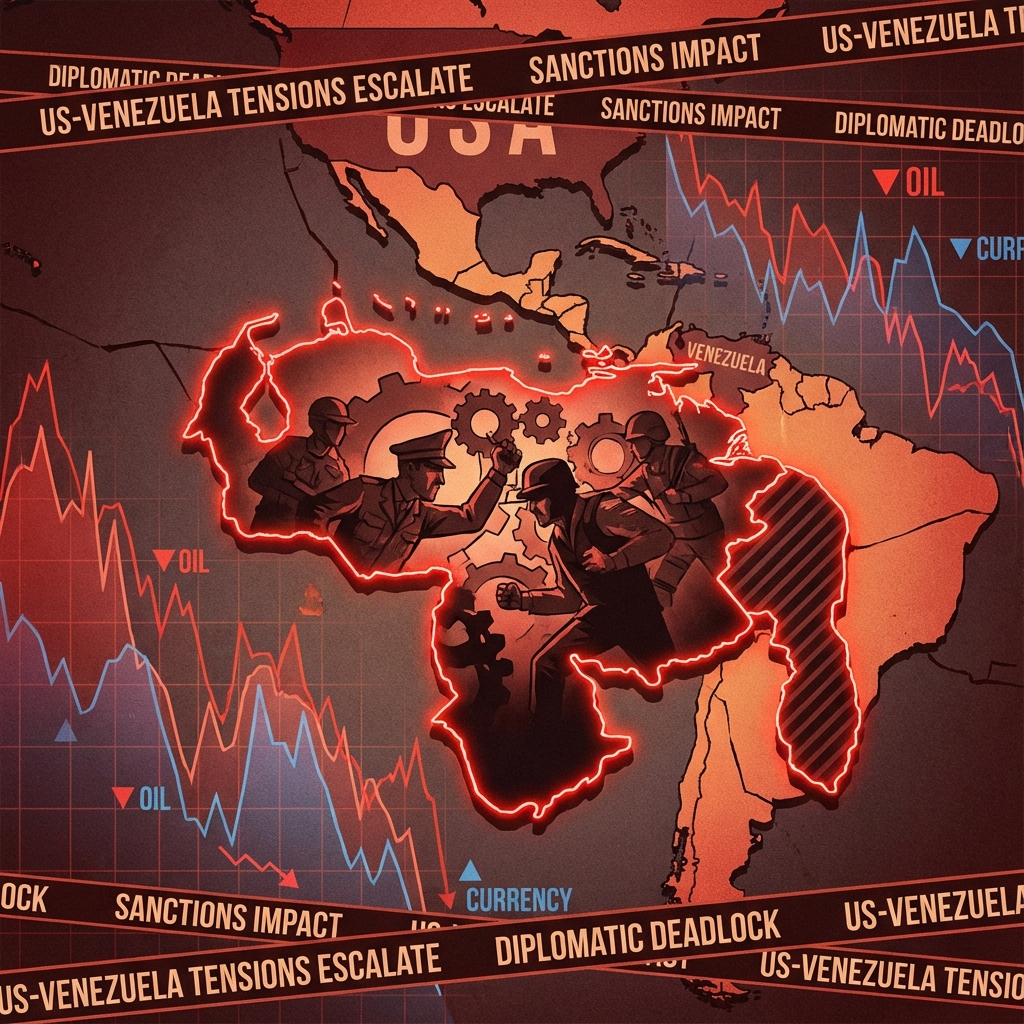
In a geopolitical development of historic proportions, United States military forces have reportedly captured Venezuelan President Nicolás Maduro in a coordinated operation within Venezuela and subsequently transferred him to U.S. custody. The action was confirmed in a statement by U.S. President Donald Trump, who declared that the United States would establish a temporary administrative authority to "temporarily run Venezuela" with the stated goal of securing a transition of power. This unprecedented declaration has sent profound shockwaves across international diplomatic circles, financial markets, and the global political order.
The operation represents one of the most significant and overt U.S. military interventions in Latin America in the modern era and marks a dramatic escalation of Washington's protracted political and economic standoff with the Maduro government. The forcible removal of a sitting, albeit contested, head of state by a foreign power has precipitated an immediate and intense international debate concerning the principles of national sovereignty, international law, and regional stability. In response, world leaders have convened emergency security and diplomatic meetings, with a cascade of strong reactions emerging from key global and regional powers within hours of the initial reports.
Widespread Global Political and Diplomatic Fallout
The international political reaction has been swift, sharp, and largely condemnatory. Major global and regional powers have voiced significant opposition to the U.S. action.
Key Reactions:
- Latin American Condemnation: A significant number of Latin American governments, including regional powerhouses such as Brazil, have strongly condemned the intervention as a flagrant violation of national sovereignty and a dangerous precedent for the region. Brazil's foreign ministry described the move as having crossed an "unacceptable line" in inter-American relations.
- Reaction from Major Powers: The People's Republic of China and the Russian Federation, both significant economic and political allies of the Maduro government, issued sharp warnings against U.S. unilateralism and interference in the internal affairs of a sovereign state.
- United Nations Review: The Secretary-General of the United Nations announced that the Security Council would convene to review the legality and broader implications of the intervention under international law. This signals a formal shift in the crisis from a bilateral military conflict to a multilateral diplomatic and legal confrontation.
Immediate Market Impact and Investor Reaction
Global financial markets reacted immediately and forcefully to the heightened geopolitical uncertainty. The development triggered a classic "risk-off" cascade across all asset classes as investors moved to hedge against unpredictable outcomes.
Flight to Safe-Haven Assets
Gold and silver prices surged as capital flowed into traditional safe-haven assets. This flight to quality reflects a deep-seated investor fear of systemic instability and a search for tangible stores of value outside of traditional financial instruments.
Volatility in Energy Markets
Crude oil prices became highly volatile. While Venezuela's production is constrained, it holds the world's largest proven oil reserves. The direct U.S. involvement and the potential for a U.S.-administered revival of its energy sector introduce a highly uncertain, long-term variable into global supply-demand equations. In the short term, the market is pricing in a significant geopolitical risk premium related to potential regional escalation.
Decline in Global Equities
Global stock markets weakened as risk appetite evaporated. The increase in geopolitical uncertainty has prompted a sell-off in risk assets, particularly in sectors sensitive to global trade and economic stability.
Market analysts have noted that this event injects a substantial and durable geopolitical risk premium into already fragile global markets, which are contending with persistent inflation and an uncertain path for central bank policy. Volatility is expected to remain elevated across currency, fixed-income, and equity markets.
Strategic Implications and Future Outlook
The long-term consequences of this intervention are profound and will likely reshape the geopolitical and economic landscape of the Western Hemisphere and beyond. With the United States now signaling its intent to directly influence the stabilization and potential revival of Venezuela's vast energy sector, the future trajectory of global energy markets, regional political alliances, and international trade flows has become a matter of intense speculation.
The critical variable in the coming days and weeks will be the international response and the potential for military or diplomatic escalation. Whether the situation is contained and moves towards a U.S.-led stabilization or escalates into a broader regional or international conflict will determine not only the future of Venezuela but also the direction of global markets and geopolitics for the foreseeable future.
Disclaimer: This article is a speculative analysis based on a hypothetical news event and is for informational purposes only. It does not constitute financial or investment advice.