Silver Smashes Records, Oil Surges, and Markets Brace for 2026 Volatility
Key Insights
- Silver's Breakout: Driven by structural deficits and green energy demand.
- Geopolitical Risk: Now a primary driver of asset pricing.
- Real Asset Rotation: Capital fleeing paper assets for commodities and infrastructure.
AS THE WORLD closes the chapter on a fraught and uncertain 2025 and steps into the dawn of 2026, it is becoming undeniably clear that the tectonic plates of the global financial landscape are undergoing a profound and structural shift. The long, comfortable era defined by the seemingly unshakeable dominance of financial assets—particularly the mega-cap U.S. technology stocks that were the engine of the last decade's historic bull market—is visibly ceding ground.
In its place, a new, more volatile, and fundamentally different market regime is asserting itself, one characterized by a powerful and sustained resurgence in commodities, a renewed appreciation for real assets, and the stark re-emergence of geopolitical risk as a primary and non-negotiable factor in pricing every asset class on the planet.
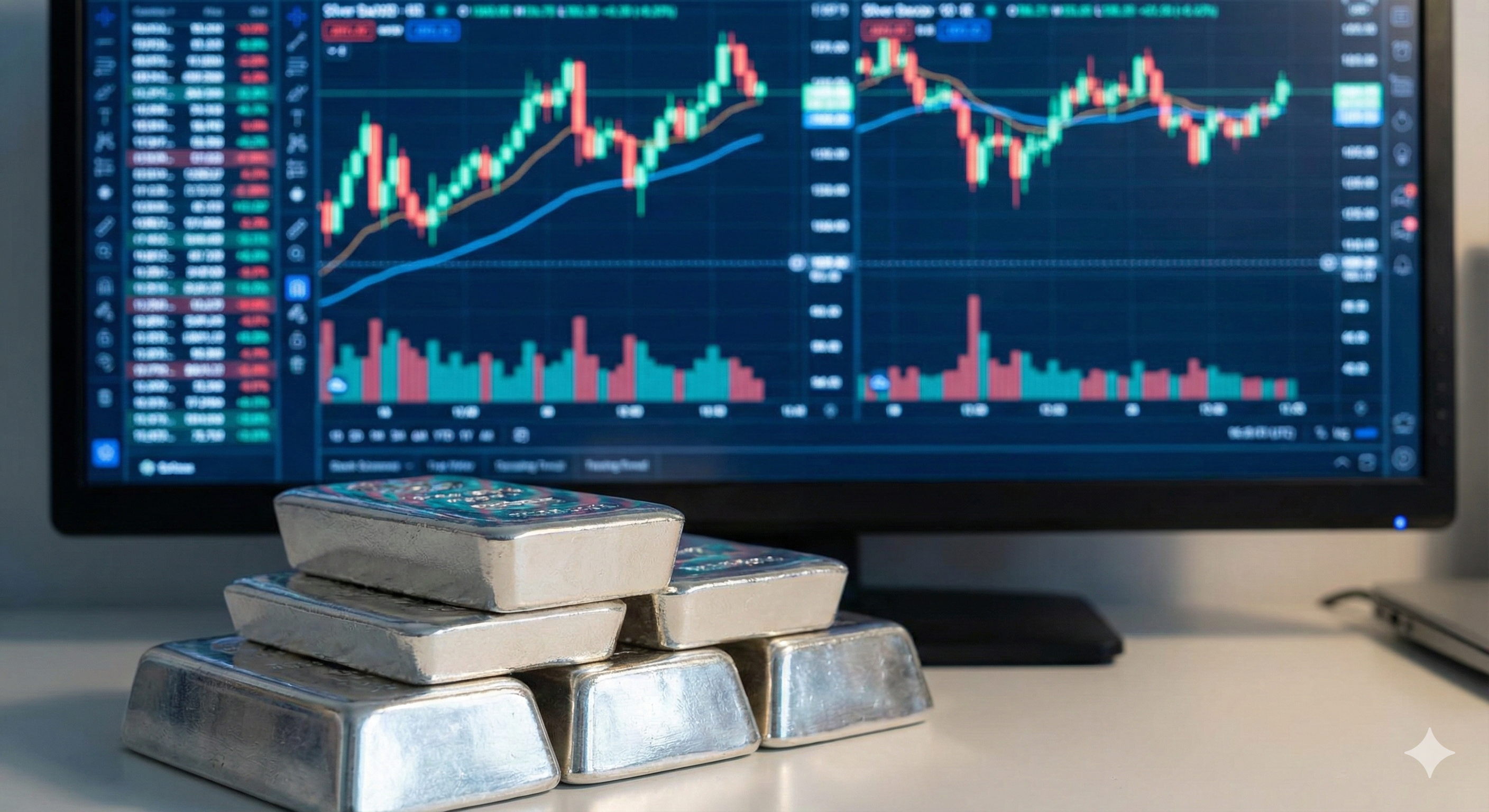
The evidence of this sea change has been both dramatic and irrefutable in the opening days of the new year. Silver, a metal often relegated to the shadow of its more famous cousin, gold, has spectacularly captured global headlines. It has not just rallied; it has exploded, surging to all-time record highs and briefly touching price levels never before seen in the history of modern electronic trading.
This was no isolated anomaly. It was accompanied by a strong, determined, and quietly powerful climb in gold, which continues to cement its status as the ultimate anchor of value in a world adrift in uncertainty. At the same time, the price of crude oil jumped sharply, a knee-jerk reaction to the grim drumbeat of escalating geopolitical tensions in critical producing regions and a renewed, visceral fear over the fragility of the world's energy supply lines.
In stark and telling contrast to this palpable boom in "real stuff," the mood across global equity markets has soured. The unbridled, almost euphoric optimism that had once propelled stock indices to ever-higher valuations has evaporated, replaced by a pervasive and cautious sense of apprehension. Investors, who for years had been conditioned to "buy the dip," are now grappling with a far more complex and treacherous trifecta: an inflationary fire that refuses to be extinguished, an ambiguous and unpredictable path for future interest rates, and a fragile, fragmenting geopolitical landscape.
This potent and historically significant combination—surging precious metals, volatile energy prices, a clear loss of upward momentum in equities, and the undeniable return of geopolitics to the forefront of market analysis—is not a mere short-term market fluctuation or a temporary rotation. It is a clear and unambiguous signal that the foundational pillars upon which the global financial system has rested for decades are shifting. This is not just a rally; it is the early and turbulent stage of a new market regime.
Driving Forces of the New Regime
- The Consequences of Structural Underinvestment: The world is now confronting the inevitable outcome of a decade-long period of underinvestment in the "old economy" sectors of mining and energy, resulting in dangerously tight supplies that cannot be easily or quickly increased.
- The Unraveling of Globalization: The era of a unipolar, hyper-globalized world is over. The rise of geopolitical fragmentation, great power competition, and "resource nationalism" is disrupting global trade, increasing costs, and making access to critical raw materials a matter of national security.
- The Persistence of Sticky Inflation: Despite a marked slowdown in global economic growth, underlying inflationary pressures—driven by supply constraints, labor shortages, and energy costs—remain stubbornly high, continuously eroding the value of cash and traditional fixed-income assets.
- Central Banks Caught in a Trap: Central banks are publicly signaling their desire to pivot towards cutting interest rates to support fragile economies, but they are proceeding with extreme caution, acutely aware that premature easing could reignite the very inflationary fire they have struggled so hard to contain.
- The Great Rotation into Real Assets: A significant and growing cohort of investors, from large institutions to individual savers, is beginning a historic rotation of capital. They are moving away from the perceived ephemerality of "paper" financial assets (stocks and bonds) and into the tangible, enduring value of "real" assets (commodities, energy, and infrastructure).
Part 1: The Silver Shock — Why This Rally Is Different
The recent explosive rally in silver, which saw it shatter its previous all-time highs, is perhaps the most potent and emblematic signal of the new market regime. To dismiss this move as mere speculation is to fundamentally misunderstand the profound transformation occurring within the silver market itself. For decades, silver's price action was often a volatile sideshow to gold's main event, driven by the whims of futures traders and investment sentiment. That is no longer the case. The current rally is different because it is built upon an unshakeable foundation of real, physical, and largely non-negotiable industrial demand.
Silver is not just a precious metal. Its unique physical properties—the highest electrical and thermal conductivity of any element—make it a critical and, in many cases, irreplaceable industrial input for the world's most important and fastest-growing technological sectors. This dual role, as both a financial asset and a strategic commodity, makes silver uniquely sensitive to the twin forces of economic growth and financial stress.
The Four Engines of the Silver Rally
The current surge in silver's price is not being driven by a single factor, but by four powerful and converging forces.
1. A Deepening Structural Supply Deficit
The world is simply not mining enough silver to meet its needs. For years, the silver market has been in a structural deficit, meaning that total annual demand has outstripped total annual supply from mining and recycling. This deficit has been met by drawing down on the world's visible, above-ground inventories held in vaults in London and New York. Those inventories are now being depleted at an accelerating rate.
2. An Explosion in Industrial Demand
The global green energy transition is proving to be extraordinarily silver-intensive. This is not a cyclical demand that ebbs and flows with the business cycle; it is a structural, one-way demand driven by government mandates and global climate goals.
- The Solar Panel Boom: The most significant driver is the solar panel industry. Every crystalline silicon photovoltaic (PV) cell uses a silver paste as a conductive layer to capture and transport electricity.
- The Electric Vehicle Revolution: Electric vehicles (EVs) use substantially more silver than traditional internal combustion cars for electrical contacts, battery components, and systems.
- 5G, AI, and the Digital Backbone: The expansion of 5G networks and massive AI data centers also require vast amounts of silver for superior conductivity.
3. The Investor Rotation into Hard Assets
After a decade where technology stocks delivered spectacular returns, a psychological shift is occurring among investors. They are increasingly wary of the high valuations in equity markets and are seeking the safety of tangible, hard assets.
4. The Tailwinds of Rate-Cut Expectations
Finally, the expectation that central banks will begin cutting interest rates in 2026 is providing a powerful tailwind. Lower interest rates reduce the opportunity cost of holding non-yielding assets like silver and gold.
Part 2: Gold’s Quiet Confirmation
While silver's explosive move has grabbed the headlines, gold has been quietly but powerfully confirming the underlying trend. Gold's steady climb, while less dramatic than silver's, is perhaps an even more profound signal of the deep-seated anxieties permeating the global financial system.
Gold remains the ultimate store of value, the final anchor in times of extreme uncertainty. The current strength in the gold price reflects a potent mix of timeless concerns: Pervasive Inflation Fears, Currency Debasement Concerns, Geopolitical Instability, and Financial System Stress.
The Game-Changer: Central Bank Gold Buying
The most significant and structural change in the gold market is the behavior of the world's central banks. For years, central banks, particularly those in Western countries, were net sellers of gold. That trend has dramatically reversed. Central banks—especially those in China, Russia, India, Turkey, and other emerging markets—have been buying gold at an aggressive and historic pace.
Part 3: Oil’s Return — Energy Is Back at the Center
The sharp, anxiety-driven jump in oil prices is the third critical element of this emerging new market regime. The era of cheap, abundant, and politically stable energy is over. Energy, the master resource that powers the entire global economy, is once again at the center of both economic and geopolitical risk.
The recent price surge was triggered by rising tensions in the Middle East and instability in Eastern Europe, but the groundwork was laid years ago by a decade of structural underinvestment.
Part 4: Geopolitics Has Become a Core Market Driver
For much of the post-Cold War era, geopolitics was a background noise. That assumption has been shattered. Geopolitics is no longer a secondary concern; it has become a structural and primary risk factor that is shaping the flow of capital and the pricing of every asset.
- The Fragmentation of Global Trade: The world is moving towards a more fragmented and regionalized system, driven by strategic "decoupling" between the U.S. and China.
- The Rise of Resource Nationalism: Countries rich in key minerals are increasingly using their geological endowments as tools of political leverage.
- The Militarization of Trade Routes: Key maritime chokepoints are increasingly vulnerable to disruption.
Part 5: Central Banks — Stuck Between Inflation and Growth
In this complex new regime, the world's central banks, particularly the U.S. Federal Reserve, find themselves in an incredibly difficult and unenviable position. They are caught in a classic dilemma, trapped between the conflicting goals of supporting a slowing economy and fighting a stubborn inflation problem.
The likely path forward for central banks in 2026 is one of slow, hesitant, and cautious rate cuts. The market's optimistic expectations for a rapid return to an era of easy money are likely to be disappointed.
Part 6: What This Means for Markets – A Great Re-Pricing of Value
The convergence of persistent inflation, deep geopolitical fragmentation, and fundamentally constrained commodity supplies is forging a new reality for global markets.
- Equity Markets: A Schism in the Equity Market, with intense pressure on "Long-Duration" growth stocks and a resurgence of the tangible economy.
- Bond Markets: A Generational Shift in Fixed Income with structurally elevated long-term yields.
- Currency Markets: A Slow Transition to a Multipolar World with strategic rise of alternatives to the dollar.
Part 7: What This Means for Investors – A New Playbook for a New Era
For individual and institutional investors alike, the emergence of this new regime necessitates a fundamental and urgent rethinking of portfolio construction and risk management.
1. The Obsolescence of the 60/40 Portfolio Demands Rebalancing
The traditional 60/40 model is under pressure. A new, more resilient approach to diversification is essential, including meaningful allocation to Commodities, Precious Metals, Energy, and Infrastructure.
2. The New Taxonomy of Risk
Risk has become multi-dimensional. A robust framework must assess Political and Geopolitical Risk, Technological Risk, and Environmental Risk.
3. The New Normal is Volatility
Markets are likely to be structurally more volatile and less predictable. Investors must be prepared for faster market cycles and deeper, more frequent swings.
Part 8: The Bigger Picture — A Tectonic Shift in the Nature of Financial Power
Beyond the immediate market implications lies a more profound, tectonic shift in the very nature of global financial power. The commodity surge and the re-emergence of geopolitical risk are not just market trends; they are the surface-level manifestations of the world's transition from a system dominated by financial assets to one where real-world resources and productive capacity are paramount.
Conclusion: A Turning Point for Global Finance
The spectacular, record-breaking surge in silver, the steady and determined climb of gold, and the anxious spike in oil prices are not disparate, unrelated market moves. They are a single, unified, and powerful message: The inflation problem is not dead, geopolitical risk is permanent, and real assets are regaining their historical power.
The financial world of 2026 will not look like the world of 2015 or even 2020. It will be More Volatile, More Political, More Resource-Driven, and More Complex. And for those who understand this shift, it will be a world full of immense and generational opportunity.
Disclaimer: This article is for informational and educational purposes only and does not constitute financial or investment advice.